Step 1 · Inputs
Start with what you actually have
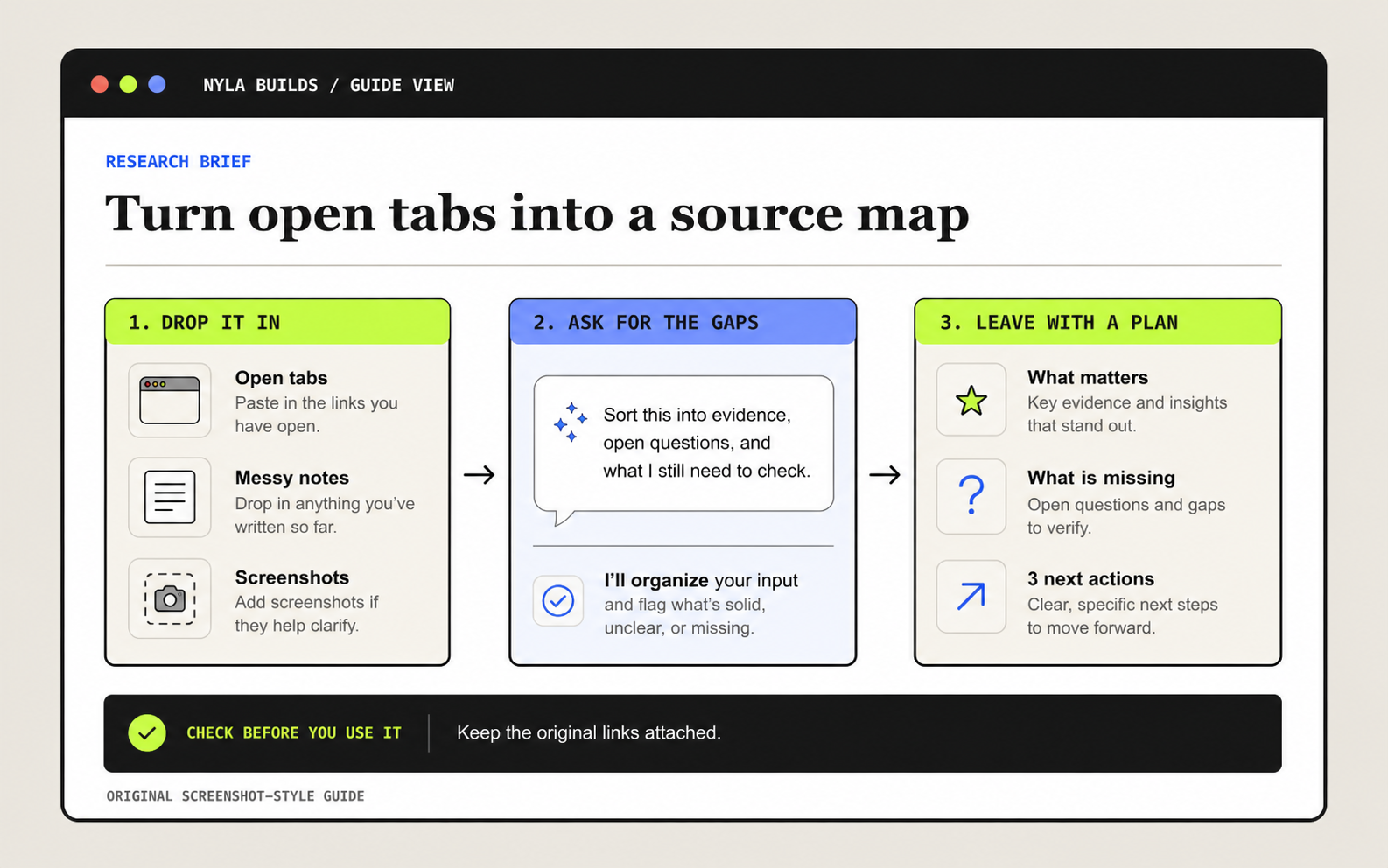
Collect the links, notes, quotes, screenshots, and questions before you try to make them look polished. The model needs the material behind the decision, not a tidy document that hides what is missing.
If you already know the outcome, write it in one sentence at the top: "I need to decide whether…" or "I need a brief that explains…" That keeps the cleanup connected to a real decision.
Step 2 · Structure
Ask for structure before prose
A polished paragraph can hide a missing source. First make the model separate what you know, what you are inferring, what still needs a source, and what decision the material can support.
- Separate confirmed facts from opinions, examples, and open questions.
- Group related notes under clear headings instead of asking for a perfect summary immediately.
- Keep specific names, dates, limitations, and source links attached to the claim they support.
- List anything that still needs a source or verification before you turn it into a conclusion.
Step 3 · Prompt
Now ask for the brief
Paste the real material below the prompt. If the notes are long, work in batches and ask the model to preserve the source labels so you can trace a claim back to the original page.
Organize the material below into a practical brief. Return exactly these labeled sections: outcome, confirmed facts, useful examples, open questions, items needing verification, and three next actions. Preserve specific names, dates, limitations, and source links. Do not invent missing information. Keep each claim tied to the source material so I can check it.

Material: [PASTE NOTES, LINKS, QUOTES, AND SCREENSHOTS HERE]

Before I use the brief, flag the one claim or next action that needs the closest human review.
Step 4 · Action
Turn the brief into something you can do next
A brief earns its keep when it changes your next move. Add the audience, deadline, tools you already use, and what a finished result should look like. That gives the model something real to organize.
Use the follow-up only after you have reviewed the brief. Otherwise the model may turn an unverified assumption into a very organized plan.
Act like a practical project organizer. Read the brief and notes without assuming missing details. Return exactly these sections: outcome, decisions already made, open decisions, next actions in order, risks or missing information, and a realistic seven-day plan. Keep the language plain and specific. Do not add tasks that are not necessary for the outcome.

Brief and notes: [PASTE THE REVIEWED MATERIAL HERE]

Separate confirmed details from assumptions, and mark the one part I should approve before I act on the plan.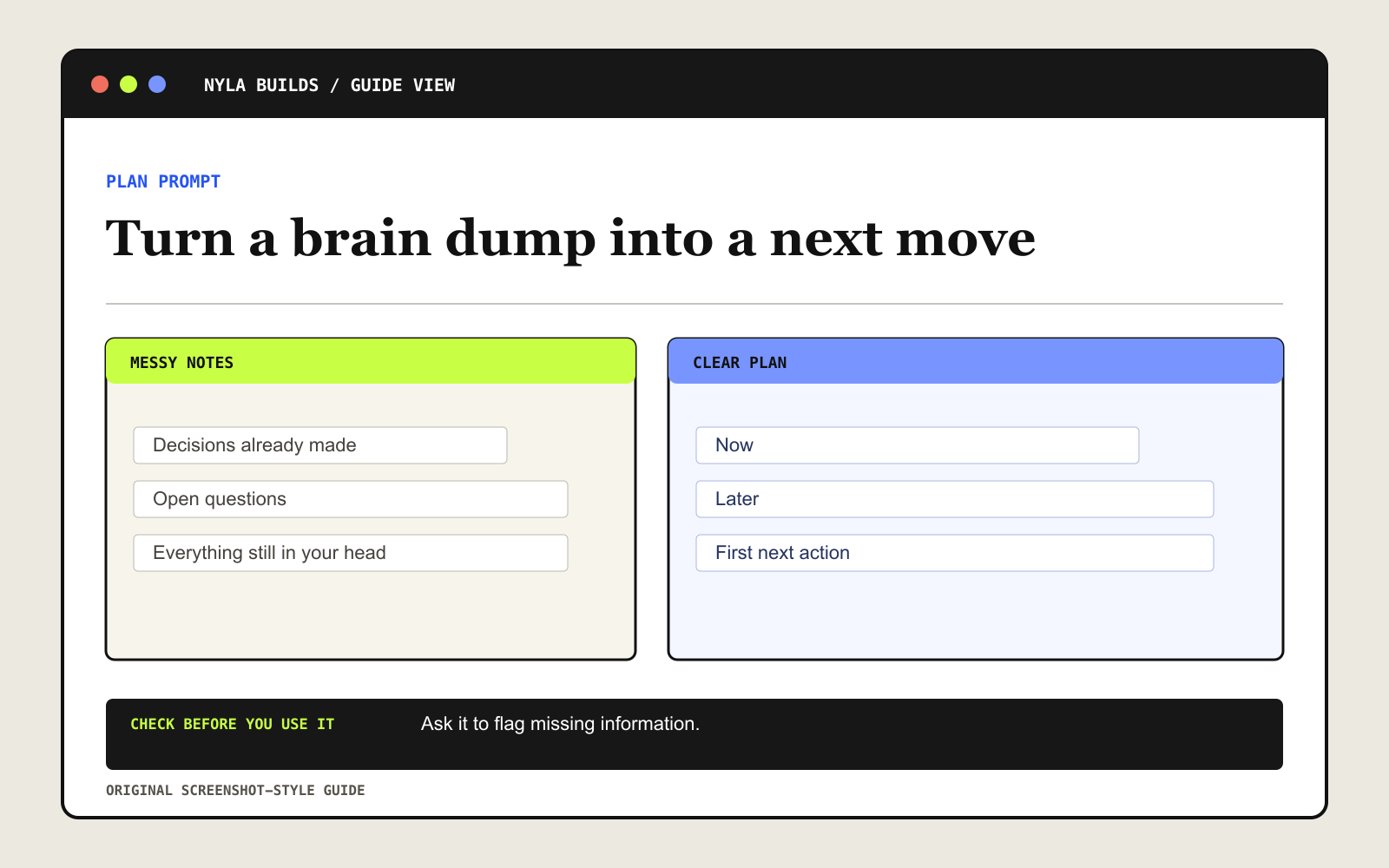
Final check
Make the gaps visible before you use the brief
- Open the source behind each important claim.
- Replace a confident sentence with an open question when the evidence is incomplete.
- Check dates, names, numbers, and product details against the original source.
- Remove any next action that depends on an assumption you have not confirmed.
- Keep the three next actions only if they move the original outcome forward.