What the test is looking for
On July 10, TikTok said it would test improved detection for accounts dedicated to posting AI-generated spam. The company specifically named politics and current events, financial advice, and medical content as areas that can affect public trust or wellbeing.
This is a test of improved detection, not an announcement that every AI-assisted video will be removed.
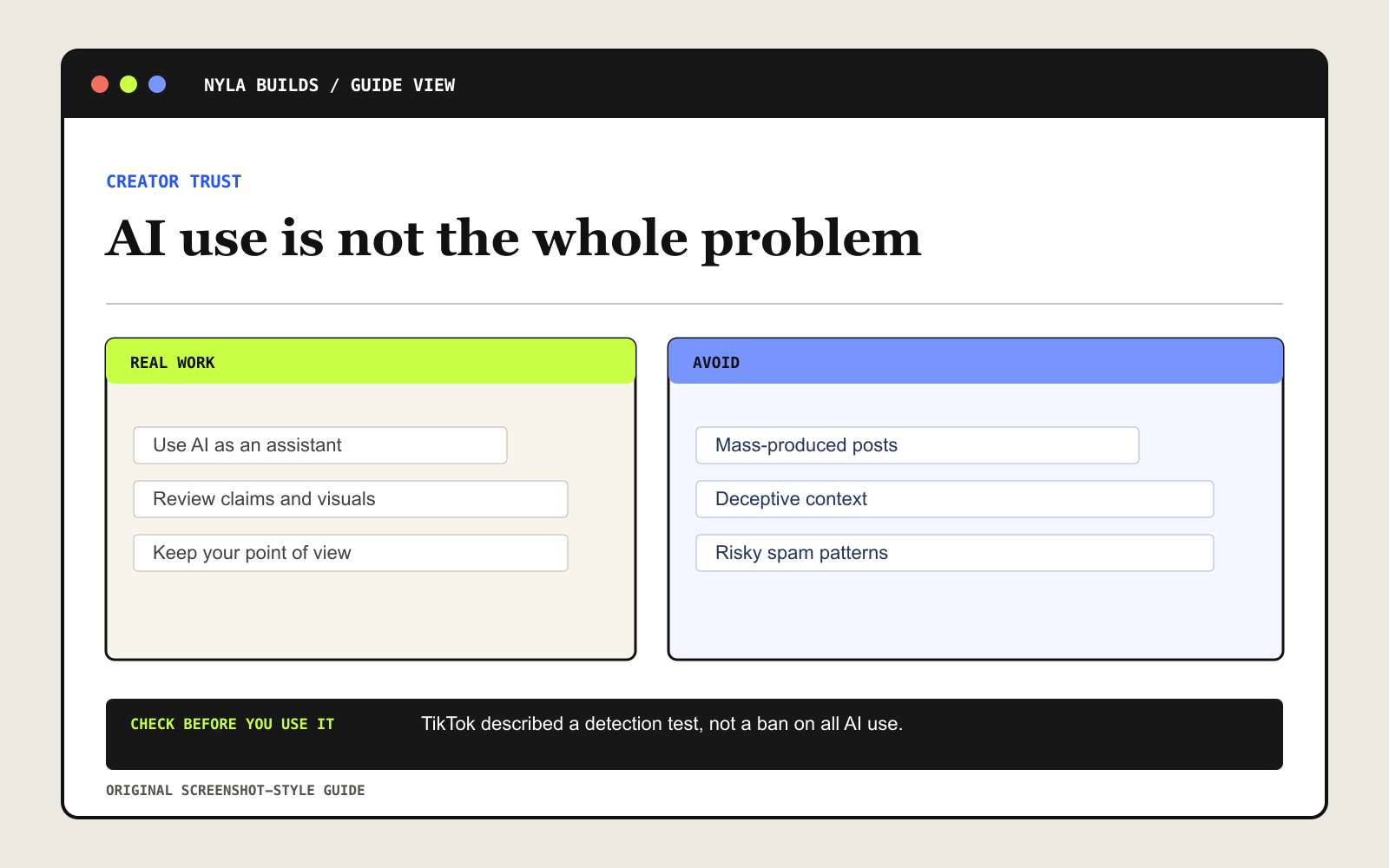
Using AI is not the same as posting AI spam
TikTok's announcement also describes AI as a creative and storytelling tool. Using AI to outline a point, clean audio, translate text, or create a clearly labeled visual is not the same as operating a factory of context-free posts.
The practical risk rises when an account mass-produces claims, hides where they came from, and gives viewers no person, source, or judgment to evaluate.
Ask yourself this before you post
- Can a viewer tell what you actually think or observed?
- Did you verify health, money, current-event, or political claims with a strong source?
- Did you label realistic AI-generated or significantly edited media when required?
- Does the post add context, an example, or a useful decision-not only volume?
- Would the post still make sense if the AI visual disappeared?
What TikTok has not told creators yet
TikTok did not publish a complete detection formula or promise perfect accuracy. Creators should not treat one announcement as proof that good work will always be recognized or spam will always be caught.
The durable move is simpler: use AI as part of a real point of view, verify risky claims, and make the source of the value obvious.