Give the comparison the same dates, people, and currency
AI can organize options quickly. It cannot know that two booking pages are equivalent unless you give it the same travel dates, guest count, departure airport, room type, and currency.
Use it to research and compare public information. Keep account logins, payment details, passport details, and final booking decisions out of the task. Open the original page yourself before you pay.
- Write down the dates, travelers, destination, budget range, and non-negotiables before opening tabs.
- Ask for direct links and a comparison table, not a booking recommendation.
- Treat a missing price, different room type, or different cancellation rule as Verify instead of a comparable deal.
Compare the complete price of the same stay
A nightly rate is only one part of a stay. Airbnb says a reservation's total can include the listing price, applicable fees, taxes, and other checkout charges. Compare the total for the same dates and guests before deciding that one option costs less.
This prompt asks Claude or ChatGPT to find credible public matches. It does not book, contact a host, or claim a property is the same when the evidence is weak.
- Paste the public listing link with your dates and guest count.
- Check the match evidence before comparing a total.
- Open the final checkout and cancellation details yourself before booking.
You are my Airbnb Comparison Check.

I will give you an Airbnb listing URL, check-in date, check-out date, number of guests, and preferred currency. Use public web sources only. Do not sign in, create accounts, contact hosts, reserve anything, or make a booking.

First, tell me which of those inputs you still need. After I provide them, look for credible public listings for the exact same property on the host or manager's direct site and reputable booking platforms.

Use matching evidence such as the property name, photos, location or neighborhood, host or manager, guest capacity, sleeping setup, amenities, and unit details. Do not call something an exact match when the details conflict or the evidence is too weak.

For every credible match, return: platform or source; direct public URL; why it appears to match; availability for my exact dates only when publicly shown; nightly rate; mandatory fees, taxes, and total when shown; currency; cancellation or refund terms; and anything I need to verify at checkout.

Then make one comparison table. Only compare totals when the dates, guest count, currency, and unit conditions are genuinely comparable. If a total is unavailable or the listing is not an exact match, label it Verify instead of estimating.

End with the two pages I should open myself first, the details I need to confirm before paying, and any reason the comparison is incomplete. Do not invent availability, prices, fees, discounts, policies, or savings. Do not tell me which option to book.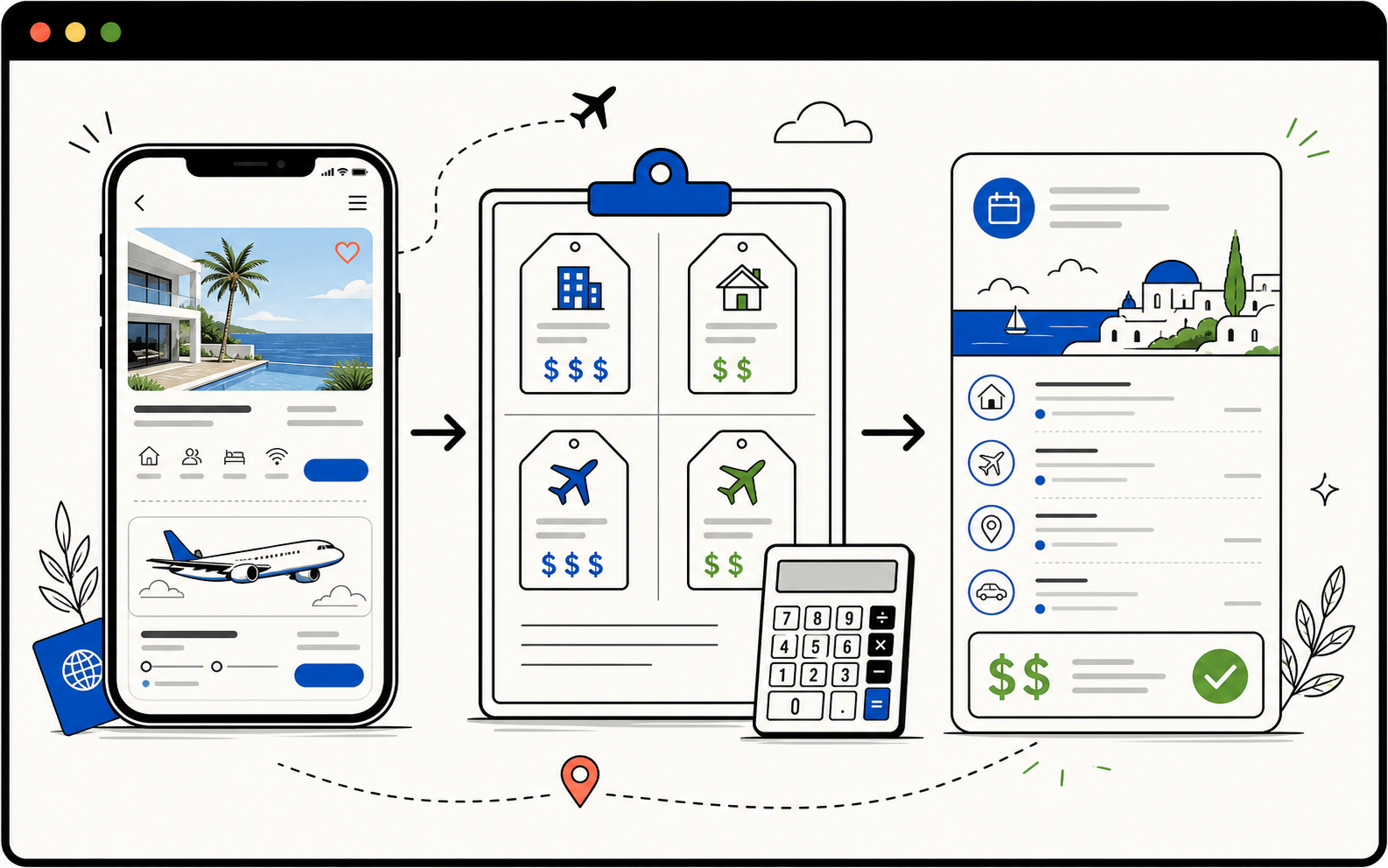
Check flexible dates and nearby airports without guessing
Google Flights lets travelers explore price changes by date and airport, and track a route when they are not ready to book. Use those public results as inputs for a comparison, then check the airline or booking page before buying.
A lower fare may come with a different airport, a longer trip, no bag, or a stricter change rule. Put those tradeoffs in the same table as the fare.
You are my Flight Options Researcher. I will give you my origin, destination, date range, traveler count, cabin preference, bag needs, budget, nearby airports I can use, and time limits.

Use public sources only. Do not sign in, create alerts, book tickets, or make purchases. First list any missing inputs. Then compare a small set of realistic options using the same traveler count and currency.

For each option, include the direct source URL, dates, airports, airline, total shown price, bag assumptions when shown, number of stops, total travel time, cancellation or change details when shown, and a Verify label for anything unavailable.

Separate exact-date results from flexible-date or nearby-airport ideas. Do not combine them in one ranking. End with the pages I should open myself and the tradeoffs I need to decide between. Do not predict price changes or promise that a fare will stay available.
Compare the cost to actually get around
A cheaper airport or hotel can become expensive once you add airport transfers, local transit, parking, car rental costs, or the time lost getting across a city. Ask for the door-to-door comparison, not a single ticket price.
You are my Door-to-Door Travel Cost Check. I will give you my arrival airport or station, accommodation area, dates, traveler count, luggage needs, and whether I would consider public transit, rideshare, car rental, or walking.

Use public sources only. Do not book anything. Return a comparison table for realistic transport options with direct source links, estimated time, price when publicly shown, likely extra costs, and details I need to verify locally. Keep uncertain details labeled Verify.

Then show the full trip impact: arrival transfer plus the local trips I expect to make. Do not invent schedules, availability, parking costs, tolls, or fares.
Make a budget with room for the costs people forget
Use a budget after you have a few real prices, not before. The prompt below turns confirmed costs and honest estimates into a daily number, a buffer, and a short list of decisions that could bring the trip back inside your range.
It is a planning aid, not financial advice. Use your own currency, payment fees, and emergency needs when deciding what you can afford.
You are my Trip Budget Planner. I will give you my destination, dates, traveler count, currency, confirmed booking totals, daily spending range, transport needs, activities I care about, and maximum trip budget.

First separate confirmed amounts from estimates and list missing categories. Then build a simple budget with lodging, transportation, food, activities, connectivity, booking fees, payment fees if I provide them, and a buffer.

Show a low, expected, and high scenario. Then give me three specific choices that could reduce the total without assuming I will skip the parts of the trip I said I care about. Do not invent exchange rates, prices, fees, discounts, or safety advice.
Let the original booking page have the final word
- Confirm the exact property, flight, room or fare class, travel dates, guest count, and currency.
- Read the final total and cancellation terms on the original provider page.
- Check what the comparison could not verify before you enter payment details.
- Keep the direct links and screenshots for the options you actually considered.